
By ALBERT STUMM Associated Press
Many people know the sting of having said too much, a cringey feeling that bubbles up after sharing the wrong details at the wrong time. Now, imagine drunkenly telling two of your superiors about the time you had a bathroom emergency onstage in front of hundreds of people.
Leslie John feared she had killed her career. Instead, it became an asset.
“Those two grand poo-bahs, they became my closest mentors,” said John, a Harvard business professor and author of “Revealing: The Underrated Power of Oversharing.” “And it’s not in spite of my having shared my embarrassing story with them, because they’ve told me it’s because of it.”
John acknowledges that she may have gotten lucky, since her openness caused the professors to see her as different from other junior colleagues. But the experience illustrated a point.
Most people worry about the risks of oversharing, but in reality, opening up often builds trust and leads to stronger relationships, she said. (Her advice is for in-person relationships; sharing online is something different, carrying different risks.)
So, how do you know when it’s TMI or if you’re not sharing enough?
Context is key
Kathryn Greene, a communications professor at Rutgers University, has been studying what’s known in academia as “disclosure” since the 1980s. She said people may not realize how often they make decisions about whether to disclose something personal.
“We’re constantly making these evaluations in all of our relationships and reassessing as it goes along,” Greene said.
She said context is key. Telling your doctor about a sexually transmitted infection is clearly different from telling your boss.
Being open about personal aspects of your life can bring people together, but if you reveal too much too soon, it will turn people away.
Greene offered the example of when two people start dating. They first offer only a trickle of information to test if their values align.
“There’s a pretty predictable pattern as we test for a positive rather than neutral or negative reaction,” she said. “It’s going to lead to us potentially sharing more.”
Why you share is as important as what
John suggested analyzing why you want to share and questioning if it’s with the right person at the right time, which “requires a lot of self-honesty.”
When she was pregnant during the pandemic, she told her landlord because she was dying for connection. The landlord, apparently wary of tenants with children, put the place up for sale the next day, and she had to move.
“If I had been honest with myself, why do I want to reveal this? Because I want love and excitement,” she said. “Well, the landlord is not the right person to reveal to.”
When to share
People rarely think of the risks of revealing too little information, however, John said. Without opening up to acquaintances, they’ll never become close friends. If you don’t tell the love of your life that you love them, it’s a missed opportunity that’s hard to recover from.
On the other hand, revealing too much is recoverable. John argues that the answer to feeling like you’ve overshared is to share more, not less.
For instance, if you think you may have offended someone at work, it presents an opportunity to stop by their office to clear things up.
“What feels like overcommunicating is just communicating,” she said.
What not to share
Greene said one kind of oversharing won’t get you anywhere — the kind where someone dumps personal information on another person without letting them speak.
Over time, such an imbalance will degrade a relationship.
“Most people will try to distance themselves if they’re finding time after time that this balance doesn’t ever shift,” she said.
Gossip is another. John’s research includes examining what’s called “spontaneous trait transference.” Essentially, that means that when you share someone else’s personal information, or if you speak badly about someone, the recipient of the information will implicitly associate those negative things with you and your character, John said.
“It happens automatically, outside of conscious awareness,” she said. “Literally, it makes you look bad.”
But she said anything else is fair game, especially if the goal is to feel more known. Besides, sharing feels good.
John pointed to studies that have shown that pleasure centers in the brain light up when people self-disclose.
“Nature has a way of making what’s good for us pleasurable,” she said. “In moderation.”
___
EDITOR’S NOTE: Albert Stumm writes about wellness, travel and food. Find his work at https://www.albertstumm.com
News
Is TMI really such a bad thing? Here’s the case for oversharing
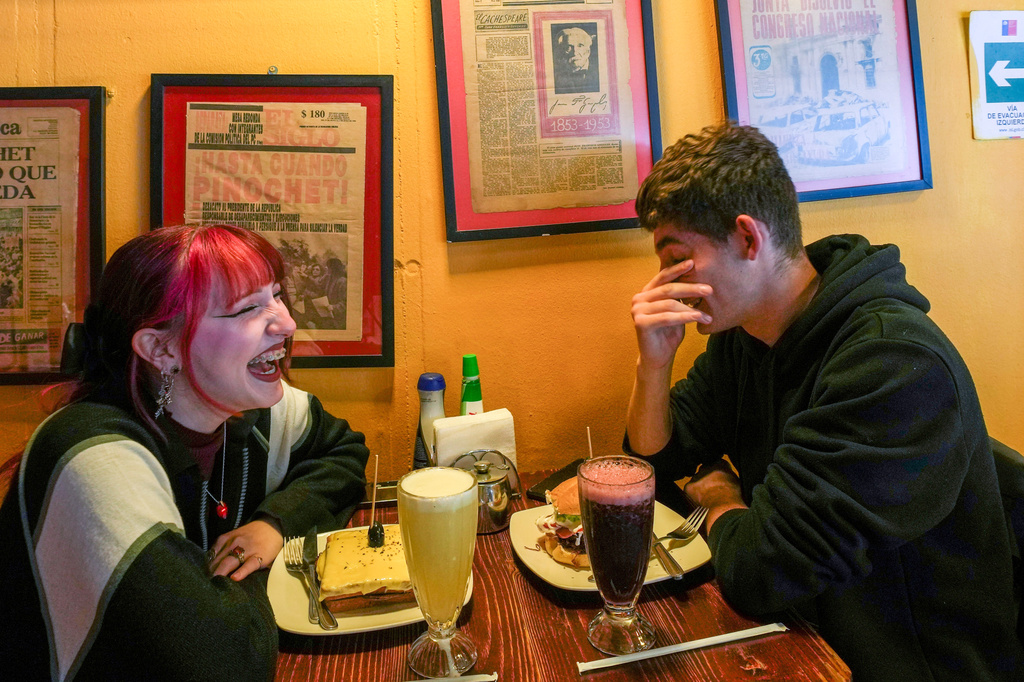
FILE - A couple sit in a cafe in Santiago, Chile, on Nov. 6, 2025. (AP Photo/Esteban Felix, File) Photo: Associated Press